Swim Smarter, Not Just Harder: How Underwater Video Is Changing the Game for Everyday Competitors
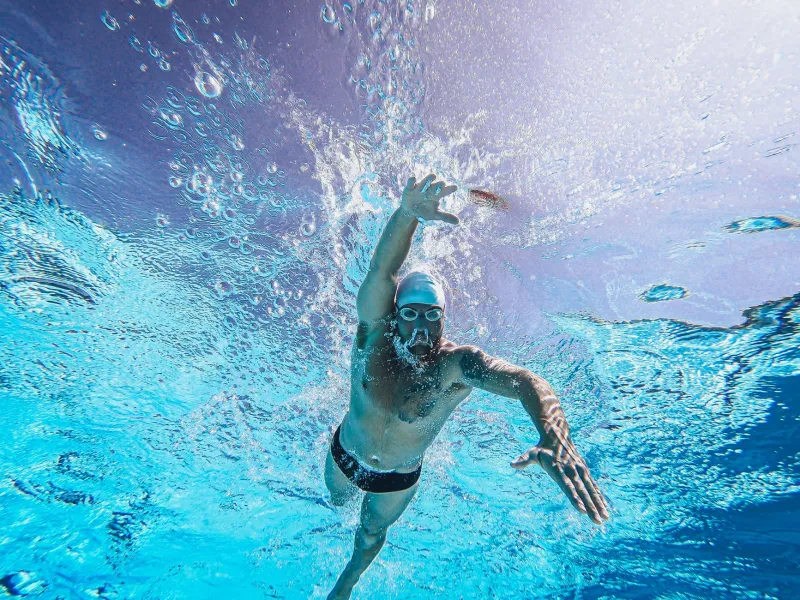
For most of swimming's history, feedback on your stroke came from two sources: your coach's eyes from the pool deck and whatever you could feel from inside the water. Neither is particularly reliable. Coaches are watching multiple athletes at once, angles from above the surface are limited, and your internal sense of what your body is doing underwater is, to put it generously, wildly inaccurate.
Elite programs figured out decades ago that underwater video changes everything. When you can actually see your catch position, your kick depth, your hip rotation, and your entry angle, the guesswork disappears. The problem was that the technology required to do this well—multiple camera angles, specialized housing, dedicated video staff—was expensive and logistically complex. It lived at Division I programs and national training centers, not at your local USA Swimming club or masters team.
That gap has closed fast. And if you're not taking advantage of it yet, you're leaving a significant edge untouched.
The Tech That Made This Accessible
The shift started with action cameras. Once GoPro and its competitors drove the price of waterproof, high-definition video hardware into the consumer range, the barrier to underwater filming dropped dramatically. A basic setup—a GoPro Hero or similar camera in a pole mount or suction-cup housing attached to a lane line—can capture usable underwater footage for under $300. That's a one-time investment that will outlast multiple seasons of gear.
What's happened more recently, though, is the emergence of software that actually helps you interpret what you're seeing. Apps like Coaches Eye, Hudl Technique, and a growing number of swim-specific platforms allow you to draw angle overlays, slow footage down to frame-by-frame, and compare your stroke side by side with reference video. Some newer tools are integrating AI-based analysis that can flag specific technique issues automatically—things like early hand exit, dropped elbow on the catch, or asymmetrical kick patterns.
These aren't perfect systems, and we'll get to that. But for a masters swimmer in their thirties or forties who's never had access to serious technique coaching, even basic visual feedback can be genuinely revelatory.
What to Actually Look For
Having footage and knowing what to do with it are two different skills. Watching your own underwater video for the first time can be overwhelming—there's a lot happening, and it's easy to hyperfocus on something cosmetic while missing a more fundamental issue.
Here's a practical hierarchy for what to examine first:
Hand entry and catch position — This is where most recreational swimmers lose power before they've even started pulling. Look at where your hand enters the water relative to your shoulder line, and watch for what happens in the first foot of the pull. A dropped elbow in the catch phase (sometimes called a dropped elbow or early pull) means you're pushing water down instead of back. It's one of the single most common efficiency killers in age-group and masters swimming.
Body rotation and alignment — Freestyle and backstroke are rotational strokes. Watch how your hips move relative to your shoulders. Are you getting full rotation, or are you swimming flat? Flat swimming reduces your effective pull length and puts more strain on your shoulder.
Kick mechanics — Specifically, kick depth and origin point. A kick that originates from the knee rather than the hip is a common issue that adds drag without generating meaningful propulsion. Footage from behind or below the swimmer is most useful here.
Head position and breathing mechanics — This one is hard to feel from inside the stroke. Lifting your head to breathe disrupts your body line more than most swimmers realize. Footage from the side during a breathing stroke is eye-opening.
Underwater work off walls — Breakouts are a significant source of free speed that most recreational swimmers underutilize. Check your streamline tightness, your dolphin kick depth, and the angle at which you break the surface.
Setting Up a Useful Filming Session
Getting good footage requires a little setup. A few practical tips from swimmers who've been doing this for a while:
Film in a lane with good lighting. Many indoor pools are darker than you'd expect on camera. Natural light from overhead skylights helps. Exterior pools obviously have an advantage here.
Get multiple angles. A side view shows your rotation and head position. A front-on or slightly below view captures your catch and entry. An underwater view from behind shows your kick. You don't need all of these every session, but varying your angles over time gives you a more complete picture.
Have someone film you doing race-pace efforts, not just easy swimming. Your technique at 60% effort looks different from your technique at full sprint, and the breakdown points at high intensity are what actually matter for competition.
Film regularly, not just once. A single session gives you a snapshot. Consistent filming over months shows you whether your changes are sticking.
Avoiding the Analysis Paralysis Trap
Here's the honest caveat: video analysis is a tool, not a solution. And it can become counterproductive if you're not careful about how you use it.
Swimming is a complex motor skill. You cannot consciously fix five things at once while also trying to swim fast. The swimmers who get the most out of video analysis are the ones who identify one or two priority issues, work on them deliberately in practice, and then step back and let the adaptation happen—rather than obsessing over every frame of every session.
There's also a real risk of over-correcting. If you've been swimming with the same entry angle for twenty years, changing it will feel wrong before it feels right. Give technique changes time to become automatic before you judge them by how they feel.
The goal of underwater video isn't perfection. It's progress. And for the vast majority of competitive swimmers who've never had access to this kind of feedback, even small, targeted improvements to fundamental mechanics can translate directly into faster splits—without adding a single yard to your training volume.