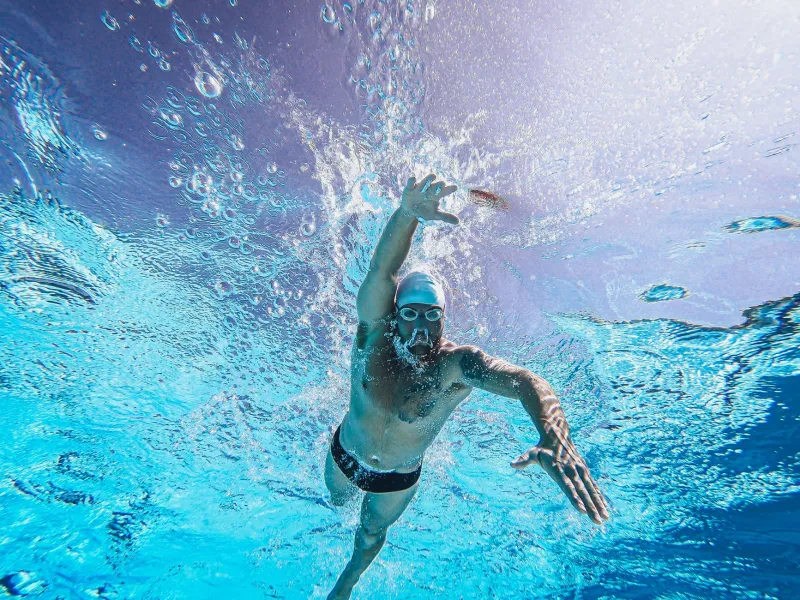
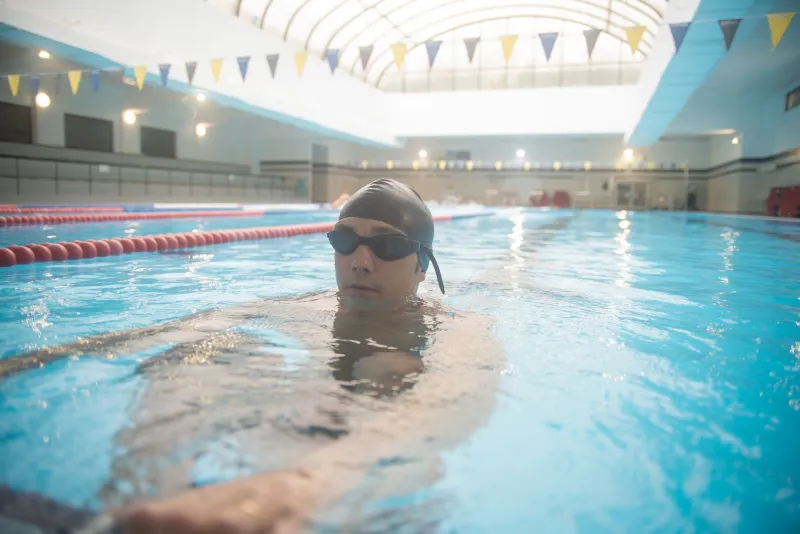
Seven Things Pool Swimmers Learn the Hard Way in Open Water
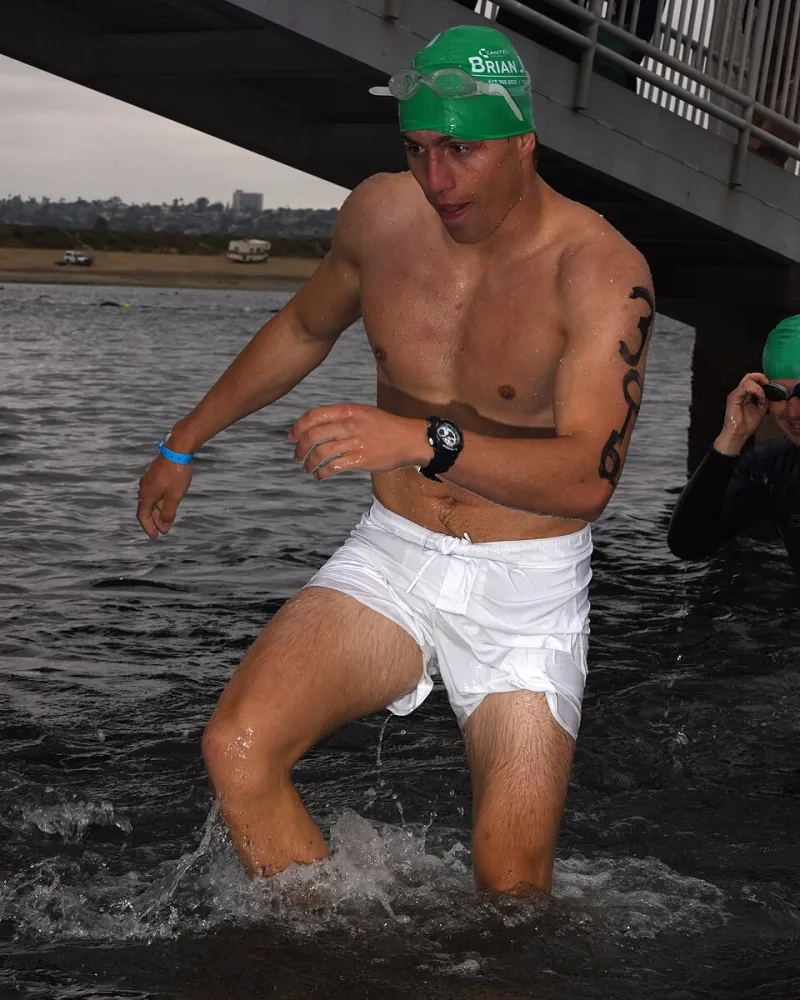
Photo: Chris Hunkeler from Carlsbad, California, USA, CC BY-SA 2.0, via Wikimedia Commons
Every fall, a fresh wave of triathletes discovers the same thing: the swim leg of a triathlon is not a pool swim with a scenery upgrade. It's a different sport that happens to use the same stroke. If you trained exclusively in lane lines and you've got a lake or ocean start on the calendar, here are the seven adjustments that matter most—no fluff, just the stuff that actually changes your race.
1. Learn to Sight Without Killing Your Stroke
In a pool, the wall tells you where you are. In open water, nothing does. Sighting is the skill that separates confident open-water swimmers from people swimming a very slow diagonal.
The technique: during your catch, press down slightly with one arm and lift your eyes just high enough to get your goggles above the surface—then turn your head to the side to breathe like normal. Sight every 6 to 10 strokes in calm water, more in chop. Practice this in the pool first. Pick a target on the wall, swim toward it, and check yourself. Most first-timers drift 10 feet for every 100 yards without knowing it.
2. Your Wetsuit Is Equipment, Not an Accessory
USAT-sanctioned races have wetsuit legality rules based on water temperature, so check before you assume. When it's legal, a proper triathlon wetsuit—rubber-coated, buoyant, built for swimming—will change your body position and probably your split.
Three things pool swimmers get wrong:
- Fit: Snug everywhere, no gaps at the armpits or neck. A loose suit floods with water and becomes an anchor.
- Practice: Swim in it before race day, at least once. The restricted shoulder feel is real, and so is the neck chafing—body glide the heck out of your neck.
- Removal: Practice the exit. Getting a soaked suit off one-armed and half-panicked costs more time than people admit.
3. Train for the Washing Machine
Pool swimming is one person per lane. Open water starts are 50 to 300 people sprinting into the same patch of water at once. Arms fly, feet kick you in the face, and the first 200 yards feel like a collision drill.
You can't fully simulate it, but you can prepare. Practice swimming fast in a crowded pool, drafting off someone's feet, and breathing on your non-favorite side—because your breathing side might be toward the pack, and you'll want options.
4. Drafting Is Legal Here (Use It)
In a pool, drafting off the swimmer in front is poor lane etiquette. In a triathlon, it's free speed. Sitting on someone's feet or hip can cut your effort meaningfully over a long swim. Learn to settle in behind a swimmer moving slightly faster than you and let them break the water for you. Just keep your sighting up—draft blindly and you'll follow them off course.
5. Your Pool Fitness Doesn't Equal Open-Water Pace
Open water is slower. Colder water, chop, no walls to push off every 25 yards, and a wetsuit that changes your stroke all add up. Don't panic when your watch reads 8–15 seconds per 100 slower than your pool times. Set your expectations by effort and navigation, not pace.
6. Cold Water Will Punch You in the Chest
The first minute of a cold open-water swim can genuinely take your breath away—shallow, rapid breathing, a tight chest. This is normal, but it's manageable: get in early, splash water on your face and neck, put your face in the water and exhale before the start. Slow your first 100 yards on purpose. Panic in the first 200 meters is the most common first-tri swim story, and almost all of it is preventable with a proper acclimation.
7. Practice the Start and the Exit
Two moments decide how your swim feels: the first 100 yards and the last 50. Practice beach starts and deep-water starts if you can, and know your exit—where you'll stand, where you'll unzip, whether there's a ramp. In ocean races, learn to body-surf and dolphin-dive through the shallows instead of standing up too early and wading.
The Bottom Line
Pool swimming builds the engine. Open water is where you learn to steer it. Get in the open water at least two or three times before race day if you possibly can—no pool set replicates it—and treat those sessions as skill practice, not workouts. Show up having sighted, suited up, and survived a crowd start, and the swim stops being the leg you dread and becomes the one where you pass people.