48 Hours Out: Inside the Race-Week Playbook That Backstrokers Swear By
Photo: Sandro Halank, Wikimedia Commons, CC BY-SA 4.0, via Wikimedia Commons
There's a moment every competitive swimmer knows: it's Thursday night, your meet starts Saturday, and you're suddenly convinced you've done everything wrong. You're either overthinking your taper or wondering if you should sneak in one more 50s set. The swimmers who consistently drop time? They've usually stopped improvising. They run a script.
We talked with a handful of club and masters coaches plus a few backstroke specialists—arguably the most ritual-obsessed stroke group in the pool—to map out what the final 48 hours actually look like when they're done right.
Friday Is Not a Training Day
The biggest mistake coaches see isn't undertraining before a meet. It's swimmers showing up to Friday practice and treating it like a workout because they feel good. Feeling good two days out is the taper working—not an invitation to test it.
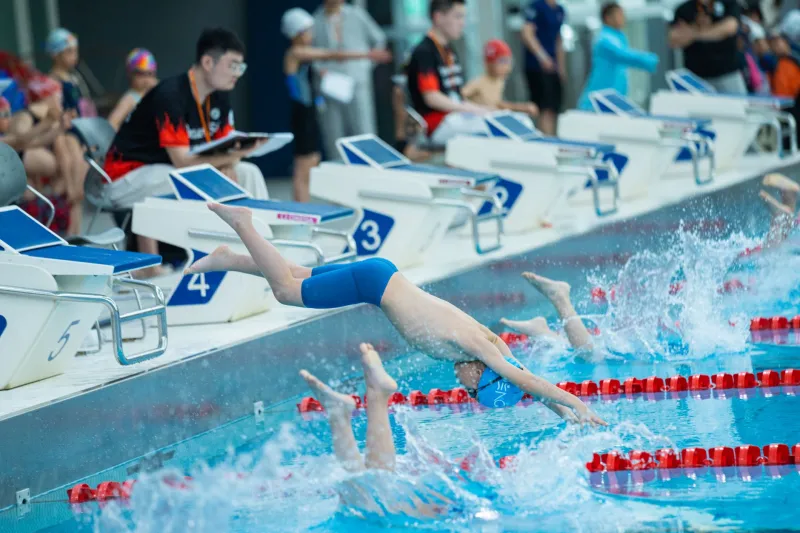
"If you're touching water on Friday, you're waking the system up, not training it," one age-group coach told us. Think 1,200 to 1,800 yards, mostly build work, a few race-pace efforts off the blocks, and a long warm-down. Backstrokers especially like practicing starts and the first 15 meters, since that's where races are won or lost and where feel fades fastest without reps.
If you can't get to the pool, a short dryland activation session—bands, shoulder mobility, a few explosive jumps—covers the same ground.
Mental Reps Count. Do Them.
Here's where backstrokers separate themselves. Because they can't see the wall coming, elite backstrokers are famously obsessive about stroke counts. Counting strokes from flags to wall is a standard ritual, but the modern version happens away from the pool too.
Several swimmers described a mental rehearsal routine the night before: lying in bed, eyes closed, swimming the race in their head in real time. The start, the breakout, the stroke count into each turn, the final 25 when everything burns. The trick, they say, is rehearsing the race going well—not fantasizing, but running the same script you've physically practiced so many times it feels like memory.
One swimmer put it simply: "If I've swum the race 30 times in my head, Saturday is just the 31st."
Sleep Math: Two Nights Matter, One Matters More
Sports science is pretty clear that one bad night of sleep won't wreck a race—but the night before the night before matters more than most people think. That makes Friday night the priority, even though nerves usually peak Saturday.
Practical moves that came up again and again:
- Keep a consistent wake time all week, then let yourself sleep in Saturday if you can
- Pack your bag Friday afternoon, not at 10 p.m.—late-night packing is where goggles and caps get forgotten
- Screens off 45 minutes before bed; swap the highlight reel for the mental rehearsal
- If you're racing early, eat a familiar dinner Friday night. Nothing new. Nothing adventurous.
Fuel Without Experimenting
Race-week nutrition is not the time to discover you're lactose intolerant. Every coach we heard from said versions of the same thing: the two days before a meet are for foods you already trust.
A workable template: carb-forward meals Friday (pasta, rice, bread—yes, the clichés exist because they work), a solid breakfast two to three hours before warm-up Saturday, and easily digestible carbs in the 60 to 90 minutes before racing if you need them. Hydration starts Friday, not when you're already at the deck. If your meet runs all day, pack real food—bagels, fruit, a sandwich—because the concession stand is not a fueling strategy.
The Gear Check Nobody Regrets
Somewhere in every swimmer's past is a horror story: the torn goggle strap, the dead timing watch, the tech suit left in a duffel bag at home. The 48-hour script exists partly to kill these stories.
Run a full gear check Friday afternoon:
- Race goggles and a broken-in backup pair, adjusted to fit
- Two caps, especially if you're a backstroker racing long course in the sun
- Tech suit, inspected for wear at the seams
- Towel, warm layers, flip-flops, and something to eat that isn't from a vending machine
Then pack it, zip it, and don't open it again until warm-up.
Saturday Morning: Protect the Warm-Up
The last piece of the playbook is the part most swimmers fumble. Meet warm-ups are chaotic, short, and easy to waste. Have a plan written down: how long, what sets, when you're getting out. Backstrokers typically want a few flags-to-wall counts and at least one start before racing, because backstroke starts are the most feel-dependent element in the sport.
After that? Stay warm, stay off your feet, and stay in your own lane mentally. The work is done. The script has run.
Steal the Checklist
- 48 hours out: Last real practice, short and sharp, race-pace efforts only
- 24 hours out: Mental rehearsal in bed, gear packed, carb-heavy familiar dinner, early screens-off
- Race morning: Familiar breakfast 2–3 hours out, hydration all morning, written warm-up plan
- At the pool: Full warm-up, backup goggles on deck, warm clothes between events
None of this is glamorous. That's the point. The best race weeks are boring on purpose—so the race itself doesn't have to be.