Every Lap on Camera: What Age-Group Video Review Is Doing to Young Swimmers

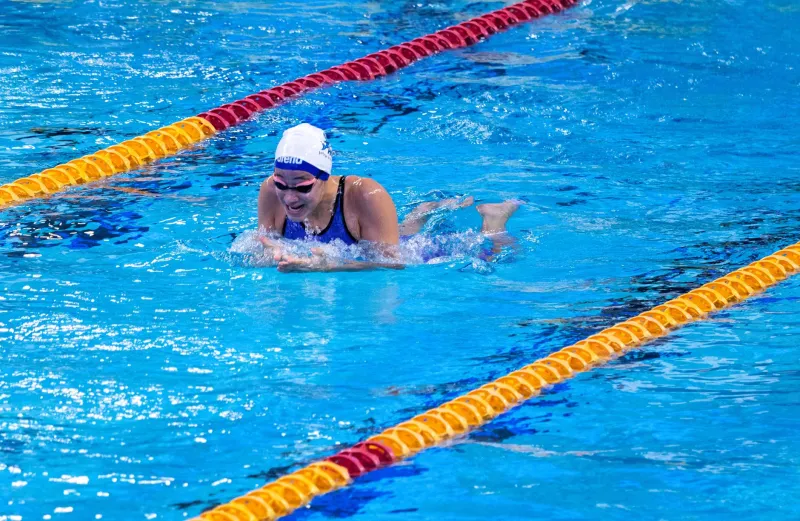
Photo: moetaz attalla, CC BY 2.0, via Wikimedia Commons
A decade ago, video analysis in swimming meant a camcorder on a tripod, a coach squinting at a laptop that night, and maybe a highlight reel at the banquet. Today, a coach with a waterproof phone case can film a 10-year-old's breaststroke pull, slow it down, overlay it against a national-level swimmer, and have it on the kid's parents' group chat before dinner.
This is, on balance, one of the best developments in age-group coaching in a generation. It is also quietly changing what it means to be a young swimmer—and not every change is for the better.
The Case For the Camera
Start with the obvious: swimming is a feel sport with no feedback loop. You can't see your own catch. You can't watch your own streamline. A young swimmer's only information used to be a coach's verbal description and whatever they could visualize. Video collapses that gap instantly.
Coaches who use it well report the same benefits: faster technical fixes, fewer arguments with stubborn teenagers ("show me" beats "trust me"), and kids who develop an actual vocabulary for their own strokes. There's something genuinely empowering about a 12-year-old pointing at their own underwater footage and spotting the dropped elbow before the coach says a word. That's not just technique—that's athlete ownership.
Video also democratizes. Elite technical analysis used to be a national-team resource. Now a club kid in Ohio can compare her breakout to the same reference footage as anyone else. That's a win, full stop.
Where It Starts to Curdle
Here's the problem: the same tool that builds ownership can also build surveillance. And the difference comes down to who's holding the camera and why.
Walk some deck environments today and you'll see the failure mode. Every lap filmed. Every rep reviewed. A 13-year-old who can't take a single stroke without knowing it's being evaluated. Parents re-watching race footage in the stands and narrating splits in the car ride home, frame by frame.
Swimming already has a well-documented attrition problem—huge participation at 10, a mass exodus by 15. The sport asks an enormous amount of repetitive, solitary work from kids, and the ones who last are usually the ones who found some intrinsic joy in it. Turn every practice into a filmed audit and you replace curiosity with scrutiny. Nobody falls in love with a sport that grades them constantly.
There's also a developmental question. Age-group bodies change fast—a growth spurt can wreck a stroke that was beautiful six months ago. Kids who've been taught that good technique equals good film can internalize a painful equation: my changing body is a problem to be fixed. Coaches need to frame video as information, not judgment, and that framing is easier to say than to maintain.
Where the Line Should Be
We don't think the answer is less video. We think the answer is video with rules. Here's the line we'd draw:
Film with purpose, not by default. Video should answer a specific coaching question—"what's happening with her kick timing?"—not create a permanent record of every lap. If nobody has a question, don't film.
Keep the review in the coach's hands. Filmed feedback should come through the coach, in a teaching context, at a ratio that keeps swimming feeling like swimming. A few focused clips per week beat a hundred per day.
Parents don't run the film room. A parent filming their kid's races to re-litigate them at home is doing analysis without the expertise or the relationship that makes analysis useful. If you want to help, ask the coach what they're working on and reinforce that—verbally.
Watch the kid, not just the stroke. Some kids light up when they see themselves swim. Some shrink. The coach's job—and the parent's—is to notice which one is happening and adjust. A tool that helps one swimmer's confidence can hollow out another's.
The Bigger Picture
Video review culture isn't going away, and it shouldn't. The swimmers coming up with good coaching and good film habits will be technically better than any generation before them. The risk isn't the technology—it's the culture that grows around it when analysis becomes the point instead of the aid.
The goal of age-group swimming was never to produce a perfect stroke on film. It was to produce an 18-year-old who still wants to swim. If the camera serves that goal, keep rolling. If it starts replacing the joy the camera was supposed to support, put it away. The pool will still be there in the morning.