Beyond the Rinse: What Chlorine Is Actually Doing to Your Hair, Skin, and Goggles
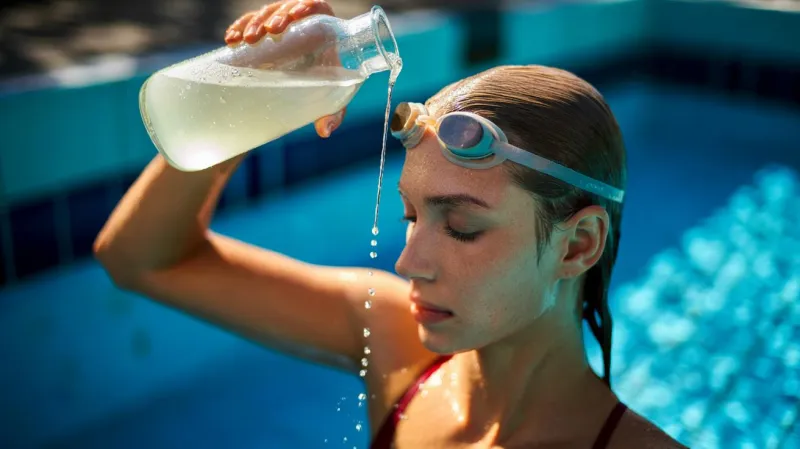
Photo: swimmer rinsing hair after pool training chlorine care, via appletonpc.org.uk
If you're logging serious yardage, you already know the drill. Dry skin that lotion barely touches. Hair that feels like straw by November. Goggles that fog up or go yellow after a few months of heavy use. Swimmers accept this stuff as part of the deal — but they don't have to accept it quietly.
The "just rinse off after practice" advice? It's a start, but it's nowhere near enough. Here's what's actually happening at the chemical level, and what competitive swimmers are doing about it.
What Chlorine Is Really Doing (It's Not Just the Chlorine)
Here's the thing most swimmers don't realize: pure chlorine isn't the main villain. The real culprit is hypochlorous acid and its byproducts, formed when chlorine reacts with organic matter — sweat, body oils, urine (yeah, we're going there). These compounds, called chloramines, are what cause that familiar sharp smell and most of the irritation.
For your hair, chlorine strips the protective lipid layer from each strand and opens the cuticle. This lets minerals — especially copper and calcium — bond directly to your hair proteins. Copper is the reason blonde and light-colored hair sometimes turns greenish. It's not the chlorine itself staining your hair; it's oxidized copper from pool plumbing and algaecides. For darker hair, the damage is less visible but still very real: brittleness, split ends, and loss of natural shine.
For skin, repeated chlorine exposure disrupts the skin's natural moisture barrier. Your skin has a slightly acidic pH (around 4.5–5.5), and pool water typically sits between 7.2 and 7.8. That alkaline exposure, session after session, degrades the lipids that keep moisture in and irritants out. Eczema flare-ups, dry patches, and chronic itchiness are common complaints among year-round competitors.
For goggles, UV exposure combined with chlorine oxidizes the polycarbonate lens material over time, causing yellowing and reduced optical clarity. The anti-fog coating — usually a hydrophilic polymer layer — gets degraded by both chlorine and the oils from your skin when you touch the lenses.
The Chelating Shampoo Difference
Regular shampoos clean the surface. Chelating shampoos go deeper — they use chelating agents like EDTA or citric acid to chemically bind to metal ions and mineral deposits, pulling them out of your hair shaft. If you haven't made the switch, this is the single highest-impact change you can make to your post-swim hair routine.
A few names that come up repeatedly in competitive swim circles:
- TRISWIM Shampoo — formulated specifically for swimmers, with vitamin E and aloe to help restore moisture while it strips the chlorine and minerals.
- UltraSwim Shampoo — a longtime staple that's widely available at drugstores and targets chlorine buildup effectively.
- Ion Hard Water Shampoo — popular with swimmers who train in pools with heavy mineral content; it's affordable and punches above its weight.
The key is using a chelating shampoo at least two or three times a week, not just after every single swim. Overdoing it can strip natural oils too aggressively. Follow up with a deep conditioner — look for ones with hydrolyzed keratin or argan oil to help rebuild the cuticle layer.
Insider tip: Several elite-level swimmers apply a light coat of coconut oil or a dedicated pre-swim hair product (like Malibu C Swimmers Wellness Hair Remedy) before getting in the water. The idea is to pre-saturate the hair shaft with a neutral substance so it absorbs less pool water. It sounds fussy, but once it's part of your pre-race routine, it takes about 30 seconds.
Protecting Your Skin Past the Locker Room
The post-swim skin routine matters more than most swimmers give it credit for. Rinsing immediately after getting out of the pool is step one — the goal is to interrupt chloramine contact before it fully sets into your skin's surface layers.
After drying off, apply a moisturizer while your skin is still slightly damp. This traps residual moisture before the chlorine-disrupted barrier lets it evaporate. Look for products with ceramides (they help rebuild the lipid barrier), glycerin (a humectant that draws moisture in), and niacinamide (which helps reduce redness and supports barrier repair). CeraVe Moisturizing Cream and Eucerin Original Healing Cream are both affordable, effective, and widely available at US pharmacies.
For swimmers dealing with persistent dryness or irritation, a swim-specific skin barrier product applied before practice can make a big difference. Blueseventy's pre-swim skin prep and Headhunter Surf Wax products have crossover fans in the swim community. Some open-water swimmers swear by lanolin-based balms for longer exposure sessions.
Don't forget your lips — chlorine hits them hard. A simple SPF lip balm applied before and after is an easy win.
Goggle Maintenance That Actually Extends Their Life
Goggles are an investment, especially if you're swimming in a performance pair. Here's how to make them last:
Never wipe the inside of your lenses. That anti-fog coating is incredibly delicate. Even a soft cloth will scratch or degrade it. If your goggles fog up mid-swim, a quick rinse with pool water and a gentle shake is your best in-session fix.
After practice, rinse your goggles with cool fresh water (not hot — heat degrades the seals and straps faster) and let them air dry in a case or goggle pouch, away from direct sunlight. UV exposure accelerates lens yellowing significantly.
If your lenses are starting to lose their anti-fog properties, there are aftermarket anti-fog sprays designed for swim goggles — Sea Buff Anti-Fog and Jaws Quick Spit are popular options. Apply a drop, spread gently with a fingertip (not a cloth), rinse lightly, and you'll get noticeably better clarity.
For lens yellowing that's already set in, there's not much reversing it — but you can slow the process by storing goggles properly and avoiding leaving them in your swim bag in a hot car.
Salt Water vs. Chlorine: Is the Grass Actually Greener?
Salt water pools have gained a lot of popularity in recent years, and you'll hear swimmers swear they're easier on hair and skin. The reality is more nuanced. Saltwater pools still use chlorine — they just generate it on-site through electrolysis of salt, rather than adding it directly. Chlorine levels are typically lower and more stable, which does reduce irritation for many swimmers. But it's not chlorine-free.
Open ocean swimming is a different story. Natural seawater contains no added chlorine, but the salt itself is drying, UV exposure is higher, and the presence of organic compounds and bacteria introduces its own set of skin concerns. For competitive swimmers doing ocean training, a thorough freshwater rinse and immediate moisturizing is non-negotiable.
Bottom line: saltwater pools are generally gentler, but they don't eliminate the need for a solid post-swim care routine.
Building the Habit
The swimmers who maintain healthy hair and skin through a full competitive season aren't doing anything magical — they're just consistent. A chelating shampoo twice a week, a ceramide moisturizer applied right after drying off, goggles rinsed and stored properly, and a pre-swim protective layer on the days that call for it.
None of this takes more than five extra minutes in your routine. And when you're grinding through a 20-hour training week, showing up to race day looking and feeling like yourself? That's worth every second of it.